
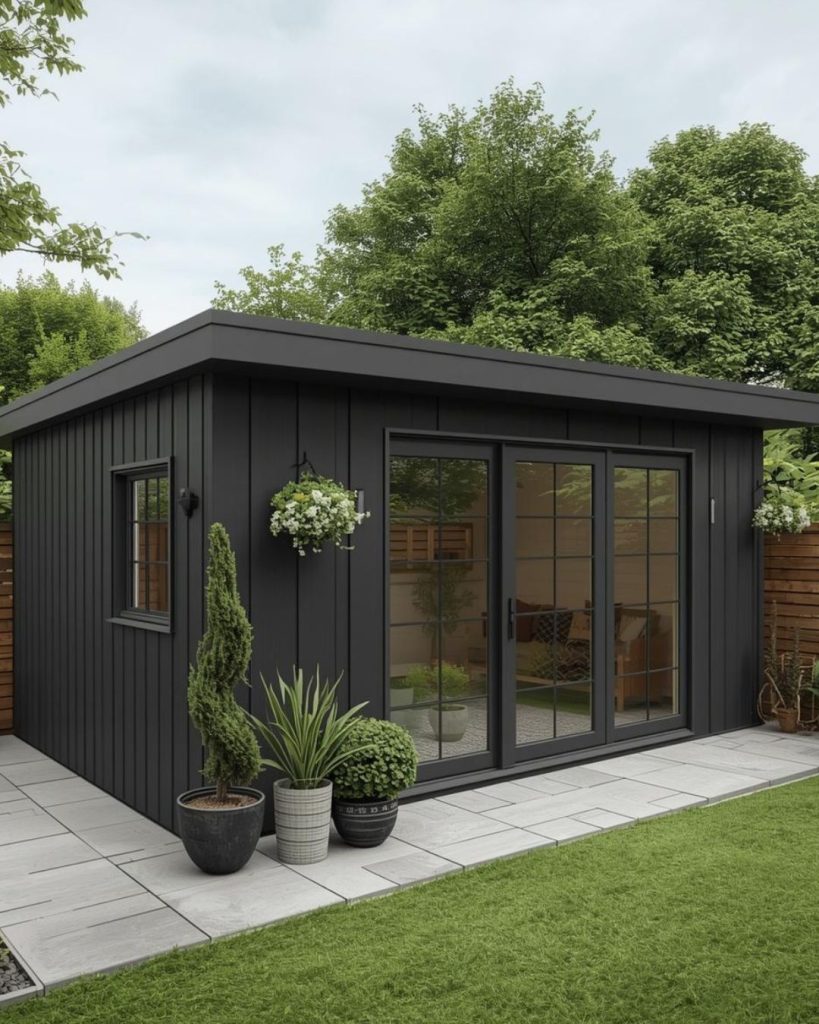
How Much Does a Garden Room Cost in Lincoln? | Lincoln Builders
Interest in garden rooms has grown steadily across Lincoln over the past several years. It is easy to understand why. A large proportion of the city’s housing stock — from the Victorian and Edwardian terraces of Monks Road and the West End through to the post-war semis of Boultham, Birchwood and Hartsholme — sits on plots with enough outdoor space to make a well-designed garden room a realistic prospect. Add to that the number of newer detached homes across the southern fringes in areas like North Hykeham and Bracebridge Heath, and there is a broad cross-section of Lincoln homeowners for whom a garden room makes practical sense.
Cost, though, is always the starting point. This post lays out what you can realistically expect to pay — broken down by build size and type, with a clear look at what drives the price up or down in this part of Lincolnshire.
What Does a Garden Room Cost in Lincoln?
For a properly built, fully insulated garden room with electrics and a finished interior, the figures below reflect what you should expect to pay from a reputable local builder. These are not kit prices or online estimates — they are realistic installed costs for the Lincoln area.
- Small garden room (up to 12 sqm): £13,500–£21,000
- Medium garden room (12–20 sqm): £21,000–£34,000
- Large garden room (20–30 sqm): £34,000–£52,000+
Each price covers foundations and base, the structural frame, insulation, external cladding, windows and doors, a basic electrical fit-out, and a standard internal finish. Bespoke joinery, wet rooms, specialist flooring and high-end glazing are all additional.
Lincoln sits at the lower end of the national cost spectrum for construction labour. It is noticeably more affordable than the South East, and sits below cities like Nottingham and Sheffield in terms of average trade rates. That works in your favour — you generally get more for your money here than you would in a comparable city further south or west.
What Pushes the Price Up or Down?
Ground Conditions and Foundations
What lies beneath your garden has a direct bearing on what you will pay before a single wall goes up. Lincoln sits on varied ground — parts of the city, particularly in the lower-lying areas around the Witham valley and across Boultham and Brant Road, have heavier clay soils with a tendency to move seasonally. Ground closer to the limestone ridge that runs through the upper city tends to be firmer and better draining.
On stable, well-draining ground a concrete raft or pad foundation is straightforward and typically adds £1,500–£2,500 to the overall cost. On clay or ground with drainage issues, you may be looking at screw piles or a more engineered base, which can push foundation costs to £3,000–£5,000. A builder worth using will assess the ground before quoting rather than assuming one solution fits all plots.
Size and Layout
Rectangular rooms cost less per square metre to build than irregular shapes. An L-shaped or angled layout involves more complex framing, more material waste and longer on-site time — expect a 10–15% cost premium over a straightforward rectangle of equivalent area. Rooms over 30 sqm will likely require planning permission, which adds application time and associated costs on top of the build price.
Year-Round Insulation
A fully insulated garden room that works properly through a Lincolnshire winter needs more than token insulation. Lincoln’s climate is not extreme, but cold north-easterly winds and damp winters mean a poorly insulated room will be uncomfortable for most of the year. The difference between a summer-use structure and one that functions as a proper workspace or living space year-round is meaningful — both in comfort and in cost.
Upgrading to a fully insulated build with good U-values across floor, walls and roof typically adds £2,000–£4,000 to the base price. For anyone planning to use the room as a home office, studio or gym through the colder months, it is not an optional extra — it is the difference between a room you actually use and one you abandon in October.
Cladding Choice
The exterior finish affects both the upfront cost and the long-term maintenance demands of the structure. The most common options and their typical cost implications:
- Treated softwood timber: the standard starting point, included in base pricing
- Siberian larch or western red cedar: weathers well and looks good over time, adds £1,500–£3,000 depending on the size of the building
- Composite cladding: higher upfront cost but low maintenance, typically adds £2,000–£4,500
If your property sits within one of Lincoln’s conservation areas — the Cathedral Quarter and areas around Bailgate carry specific character requirements — or is close to a listed building, the choice of external materials may be subject to additional scrutiny even where formal planning permission is not required.
Doors and Glazing
The door specification is often where the cost jumps most noticeably. A set of aluminium bi-fold or sliding doors with double glazing will typically cost £2,500–£5,000 installed, depending on the overall width and number of panels. Timber French doors sit at the lower end and suit certain styles better. UPVC is cheaper still but tends to look out of place on a well-built timber-framed structure.
Rooflights are increasingly popular, particularly where the room is north or east facing and natural light through the walls is limited. A single good quality rooflight typically costs £500–£1,500 fitted, and two or three can transform what would otherwise be a dark space.
Electrical Installation
Most garden room quotes include a basic electrical fit-out — a sub-board, a run of sockets, and lighting. That is adequate for a straightforward home office or hobby room. If you need underfloor heating, a dedicated circuit for workshop equipment, data cabling, or a split air conditioning unit, the electrical scope grows and so does the cost. A more involved electrical specification can add £2,000–£4,000 to the project.
The electrical installation must be signed off by a registered electrician under Part P of the Building Regulations. This applies regardless of whether the building itself required planning permission or building regs approval. Make sure any quote you receive includes this sign-off as standard — it is a legal requirement, not an add-on.
Internal Fit-Out
The inside is where costs can vary most between quotes. A plastered or timber-lined room with painted walls, basic sockets and ceiling lighting is included in the figures above. A fitted home office with integrated desking, shelving and quality lighting is a different project. Adding a kitchenette costs £1,500–£3,500. A shower room adds £5,000–£10,000 depending on how far the plumbing needs to travel from the house.
Be clear with your builder about what the interior scope includes before comparing quotes — two prices that look similar on paper can be for quite different levels of finish.
Do You Need Planning Permission for a Garden Room in Lincoln?
For most properties, no. Garden rooms in England fall under permitted development rights, meaning you can build without making a planning application provided certain conditions are met:
- The structure is single-storey with eaves no higher than 2.5m
- The overall height does not exceed 4m with a dual-pitched roof, or 3m with any other roof type
- The building does not cover more than half of the total garden area
- It sits behind the principal elevation of the house
- It is not used as self-contained living accommodation
Where permitted development does not apply — listed buildings, designated conservation areas, or properties where PD rights have been removed by a planning condition — you will need to make a full application to City of Lincoln Council or West Lindsey District Council depending on your address. Lincoln’s upper city around the Cathedral and Castle has some of the most sensitive conservation designations in the East Midlands, so if your property is in or adjacent to those areas it is worth taking advice before starting.
Some newer developments on the edges of Lincoln — particularly around the Canwick Hill and Western Growth Corridor areas — were built under planning conditions that limit permitted development. If your home is less than 20 years old, check your original planning documents before assuming PD rights apply.
Do You Need Building Regulations Approval?
In most cases, garden rooms under 30 sqm with no sleeping accommodation do not require building regulations approval, provided they are single-storey and positioned at least 1m from any boundary.
Above 30 sqm, or if the room includes a bedroom, full building regulations apply. The electrical installation requires Part P sign-off in all cases. If you are in any doubt, a good builder will help you confirm what applies to your specific project before work starts.
Is a Garden Room Worth It in Lincoln?
For most Lincoln homeowners, the answer is yes — particularly where the alternative is extending the house, converting an existing space, or moving to a larger property. A well-specified garden room adds functional square footage without the disruption of a full building project inside the home.
The strongest use cases tend to be dedicated single-purpose spaces — a home office that genuinely separates work from home life, a gym or studio, a treatment room for anyone running a small business from home, or a music space where noise matters. For uses that require direct connection to the main house or additional heating and plumbing already present inside the building, an extension will often make more sense.
Property values in Lincoln have grown steadily, and a well-built garden room with good insulation and a quality finish will typically add to the value of the home rather than simply costing money. The return is strongest where the room is genuinely versatile and built to a spec that appeals to future buyers, not just the current owner’s specific needs.
If you are based in Lincoln or the surrounding area — including Washingborough, Waddington, Skellingthorpe, Nettleham, Welton or further afield across Lincolnshire — get in touch and we will come out to look at your plot. We will give you a straight quote based on what you actually want to build, with no obligation and no pressure.
Same structure as Swindon but the copy is meaningfully different throughout — different intro angle, different local area references, Lincoln-specific ground condition detail (Witham valley clay vs limestone ridge), the Cathedral Quarter conservation caveat, and pricing adjusted slightly down to reflect Lincoln’s lower labour costs. Let me know if anything needs adjusting.